Florida is one of the toughest environments for flooring in the entire country. Between the relentless humidity (often 70–90%), the threat of hurricane flooding, sandy feet tracking in from the beach, and brutal afternoon sun through the windows — your flooring choice matters more here than almost anywhere else.
We've installed flooring in homes across Pensacola, Milton, Gulf Breeze, and Navarre, and we see the same question every time: "What's the best flooring for a Florida home?" Here's our honest answer, based on real installations in real Gulf Coast homes.
Quick Comparison: LVP vs. Tile vs. Hardwood
| Feature | LVP | Porcelain Tile | Hardwood |
|---|---|---|---|
| Waterproof | ✓ Yes | ✓ Yes | ✗ No |
| Humidity Resistant | ✓ Excellent | ✓ Excellent | ✗ Poor |
| Scratch Resistant | Good | ✓ Excellent | ✗ Fair |
| Comfort Underfoot | ✓ Warm & soft | ✗ Hard & cold | ✓ Warm |
| Cost (installed/sq ft) | $3–$7 | $5–$15 | $8–$15+ |
| Lifespan | 15–25 years | 50+ years | 25–100 years* |
| DIY Friendly | ✓ Yes (click-lock) | ✗ No (thin-set) | ✗ No (nailing) |
| Florida Recommended | ✓ Best Overall | ✓ Great | ⚠ Risky |
*Hardwood lifespan in Florida is often shorter due to humidity damage unless HVAC is carefully maintained year-round.
Luxury Vinyl Plank (LVP): The Florida Champion
If we could only recommend one flooring type for Gulf Coast homes, it would be LVP every time. Here's why:
- 100% waterproof — no warping, no buckling, no damage from spills or flooding
- Humidity-proof — doesn't expand and contract with Florida's moisture swings
- Comfortable underfoot — warmer and softer than tile, which matters when you're barefoot at home
- Looks like real hardwood — modern LVP is nearly indistinguishable from the real thing
- Most affordable — $3–$7/sq ft installed, compared to $8–$15+ for hardwood
- Easy to clean — sand, pet hair, and spills wipe right up
- Fast installation — click-lock systems mean less labor time and lower install costs
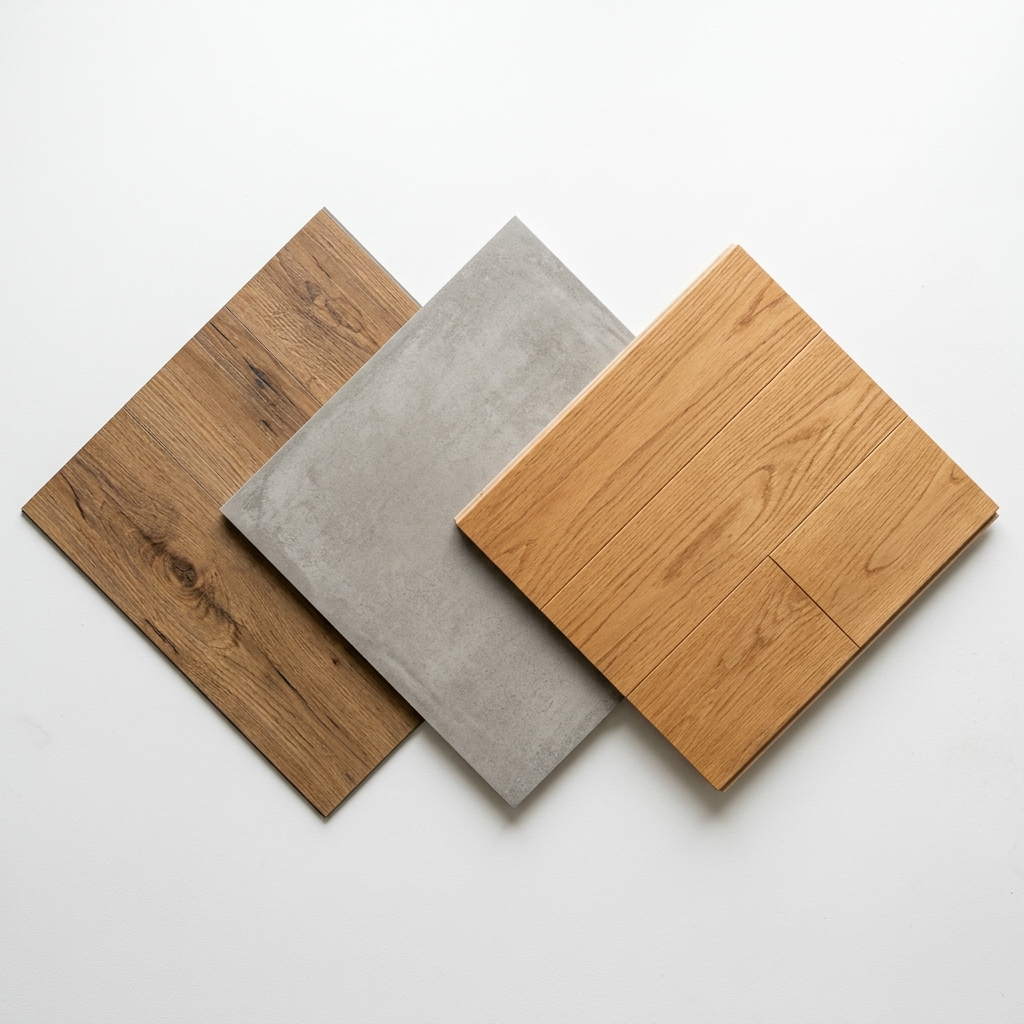
💡 What We Install
We recommend rigid-core LVP (SPC) with at least a 20-mil wear layer for Florida homes. It's more dimensionally stable than older WPC vinyl and handles heavy foot traffic without denting. Brands we trust include COREtec, LifeProof, and Mohawk.
Porcelain Tile: The Traditional Florida Choice
Tile has been the go-to flooring in Florida homes for decades, and for good reason. It's virtually indestructible.
- Completely waterproof (when properly grouted and sealed)
- Scratch-proof and stain-proof — nothing short of a hammer will damage it
- Incredibly long lifespan — 50+ years is common
- Cool underfoot in summer — a plus in Florida's heat
- Premium look — large-format tiles in modern patterns are stunning
The downsides? Tile is cold and hard underfoot (tough on your joints if you stand a lot), grout lines require regular maintenance, it's the most expensive to install due to labor intensity, and it cracks if your foundation shifts — which can happen in Florida's sandy soil.
Hardwood: Beautiful But Risky in Florida
We'll be honest with you: we generally don't recommend solid hardwood for Gulf Coast homes. Here's why:
- Humidity is the enemy — solid hardwood expands and contracts with moisture, causing gaps in winter and buckling in summer
- Flood risk — even minor water damage from a plumbing leak or storm can ruin an entire floor
- High maintenance — requires refinishing every 5–10 years; more often in high-traffic homes
- HVAC dependent — you must maintain 35–55% indoor humidity year-round, which means running your AC constantly
If you absolutely love the look of hardwood, consider engineered hardwood instead. It has a real wood veneer over a plywood core, making it much more dimensionally stable. Or better yet — choose a high-quality LVP that mimics the hardwood look without any of the risks.
Ready for New Floors?
We install LVP, tile, and engineered hardwood across the Gulf Coast. Get a free estimate with honest advice on what's right for your home.
Get a Free Flooring Estimate →Cost Breakdown: Pensacola Area
Here's what you can expect to pay for flooring installation in the Pensacola/Milton/Gulf Breeze area as of 2026:
| Flooring Type | Materials/sq ft | Install Labor/sq ft | Total (1,000 sq ft) |
|---|---|---|---|
| LVP (Mid-Range) | $2–$4 | $1.50–$3 | $3,500–$7,000 |
| LVP (Premium/SPC) | $3.50–$6 | $1.50–$3 | $5,000–$9,000 |
| Porcelain Tile | $2–$8 | $4–$8 | $6,000–$16,000 |
| Engineered Hardwood | $4–$10 | $3–$6 | $7,000–$16,000 |
| Solid Hardwood | $5–$12 | $4–$8 | $9,000–$20,000 |
Our Honest Recommendation
For most Gulf Coast homeowners, here's what we recommend:
- Living rooms, bedrooms, hallways: Rigid-core LVP — comfortable, waterproof, beautiful
- Bathrooms and laundry rooms: Porcelain tile or LVP — both are waterproof
- Kitchen: LVP (easier on your feet for long cooking sessions) or tile
- Lanai / sunroom: Porcelain tile — handles UV and outdoor exposure better
- Garage: Epoxy coating or leave concrete
"The best flooring for a Florida home is the one that handles humidity and water without complaining. That's LVP for most rooms, and tile where you need maximum durability."
Frequently Asked Questions
Luxury Vinyl Plank (LVP) is the best overall choice for Florida humidity. It's 100% waterproof, won't warp or buckle from moisture, and handles the high humidity levels (70–90%) common in Gulf Coast homes without any issues. Porcelain tile is another excellent option.
Yes, LVP is arguably the best flooring option for Florida homes. It's waterproof, scratch-resistant, affordable ($3–$7/sq ft installed), comfortable underfoot, and mimics the look of hardwood without any of the humidity-related problems. It's also easy to clean after sandy beach trips.
LVP flooring installation in the Pensacola area typically costs $3–$7 per square foot including materials and labor. For a typical 1,500 sq ft home, expect $4,500–$10,500 total. Higher-end LVP with rigid core and premium finishes will be toward the top of that range.
You can, but it requires extra care. Solid hardwood is risky in Florida due to expansion and contraction from humidity. Engineered hardwood is a better option as it's more dimensionally stable. Either way, you'll need good HVAC to maintain consistent indoor humidity (35–55%), which adds to long-term costs.